How can play therapy help?
“Birds fly, fish swim, and children play” Gary Landreth
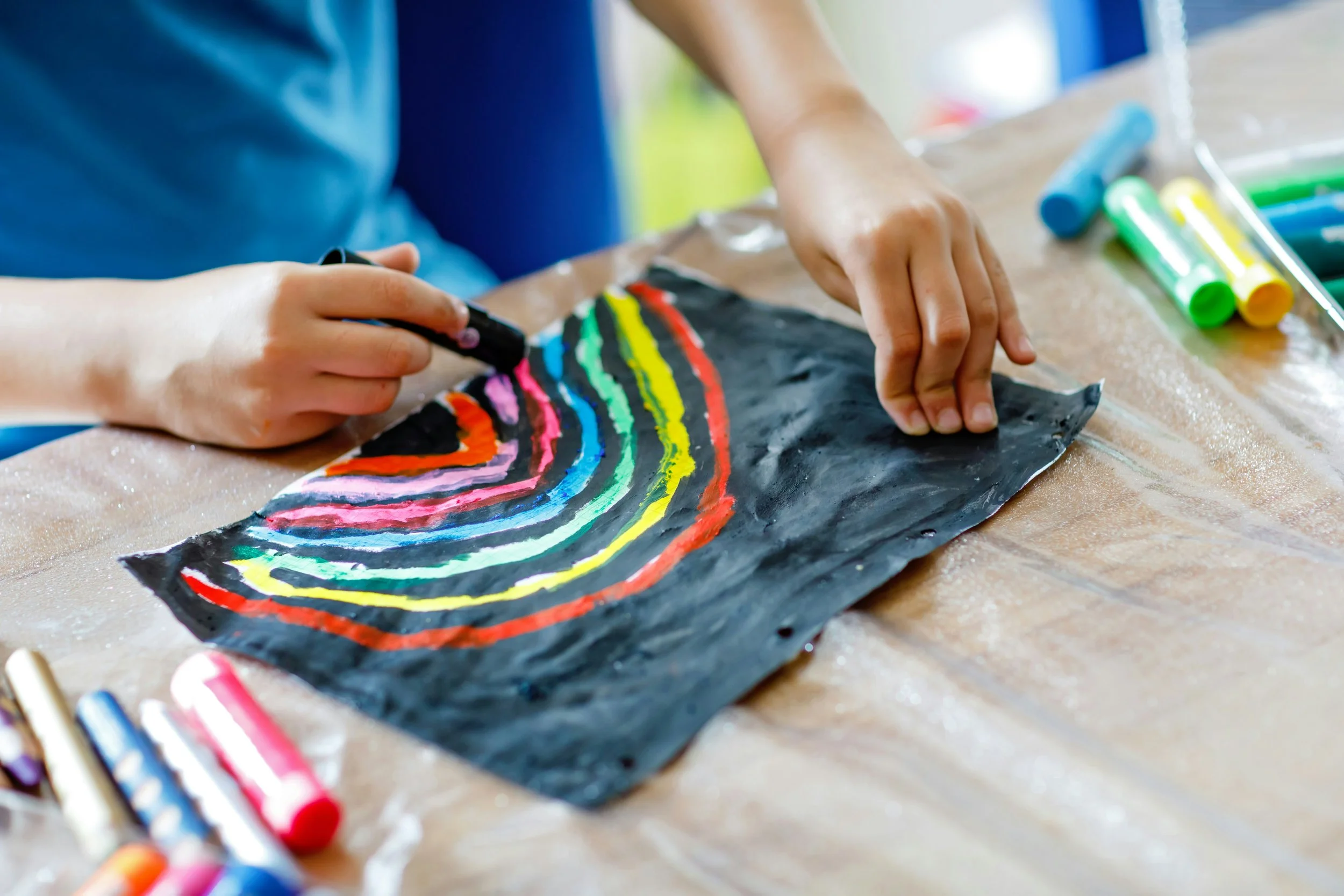
Children don’t always have the words to say how they feel. Play therapy gives them another way to express themselves — through toys, stories, and creativity. Through play, children can show what’s going on inside and begin to make sense of their world, in their own time and their own way. It helps things that once felt confusing, scary or out of control feel a little safer and more manageable. They can develop healthy coping strategies.
In the playroom, children are in charge of their play. They lead, and the therapist follows alongside — offering understanding, safety and support.
The most important part of play therapy is the relationship between the child and the therapist. It’s a space where children can be completely themselves — accepted, seen, and valued without pressure or judgement. Through this experience, they can start to believe they are “good enough” just as they are, and begin to uncover their own strengths. For some children, it’s the first time they’ve truly felt what a safe and secure relationship feels like.
Play therapy can help children experiencing:
Anxiety, low mood
Depression
Trauma
Grief and loss
Anger
Family changes or conflict
Attachment issues
Difficulties with confidence, friendships, or self-esteem